Monday, November 17, 2008

Johnny Mad Dog

I think this book should have been named Laokole instead, her story was far more impressive. But anyways, I enjoyed this book although it was crude and sad at times. There wer some parts throughout the story that stuck out and were meant to be studied. The first is on page 195,


"In history class, I'd learned taht in medieval times the Africans of the city Great Zinbabwe had built high walls of enormous stone blocks around the town's center, as protection against local invaders and Arab conquerors from the East. Similarly, the rulers of China had constructed a wall several hundred kilometers long, to defend themselves against the barbarians who roamed the border regions of their empire. Now we were the ones who were facing a wall. Were we the new barbarians, assailing the fortresses erected by the world's current rulers?"


Lao was very intelligent because she went to school and also had a need for learning. She liked knowing and figuring things out. She often had these momentary intellectual thoughts that got my mind thinking too. She was right, they were building walls to keep them out and if you compare that to history they could be mistaken as barbarrians. Later this confirmed her theory, the white people thought of Africans as barbaric and not able to control themselves or organize themselves. They thought they were horrible people that only wanted to kill each other and anyone else who got in their way.


"How is it possible that I could recollect in a minute detail all the scenes of cruelty I'd witnessed, even from afar, yet remember so little about a generous act that had such immense significance for me? Does this mean that evil leaves a deeper impression on our memory than good?"(136)


This is my favorite thought from the mind of Lao. Its so true even today. The media, friends and family recall and share stories about hard times, death, suffering etc. Rarely do we see news on TV about a beautiful marriage between celebrities rather than and dirty divorce filled with adultery and slander. Our friends and family call more often to tell us the latest gossip about their friends bad doings over the weekend rather than to comment on the beauty of the day and their latest happy story. Lao has a point, we as humans tend to remember more about the hard times and horrible evil in the world rather than the good in it.


"How was it that despite the cruelty humans were capable of, there weres still people who sacrificed themselves for others? To put this another way: given all the evil that human beings strive so hard to perpetrate, the good ought to have been driven out of existence. Yet it exists. Why? Who knows!" (157)


This quote ties in with the previous one. Lao is watching all this horrible destruction going on around her, yet there are still people who are giving themselves to help others. The doctors, the mystery man who wheelbarrowed her mother to safety, Tanisha, Katelinjne, Birgit.. They all helped Lao escape from the massacre occuring around her. I like to think that people like this are everywhere, just waiting for the right moment to emerge and help. Yes there is a lot of evil in the world, but don't forget the people like Tanisha!


There are many other places throughout the book that have significant meaning to the world and the story, but I'll save them for class. One more point I want to make is to how the author really made a point that although all this turmoil was going on, people in Africa were still living out their daily lives. He made a distinct point to show Lao's womanly problems emerging during this massacre, Johnny's fight to fit in and be the alpha dog and Lao's mother to still remain a mother although she was almost immobile.


This story showed so much strength and perseverence by the African people, its really inspiring.


http://www.youtube.com/watch?v=xyLHGlUN9rM

Wednesday, November 12, 2008

Energy Consumption in Africa

*This picture shows the World's consumption of energy compared to that of Africa.

"In comparison with other regions such as Latin America, Middle East, Europe and North America, Africa has one of the lowest per capita consumption rates. Modern energy consumption in Africa is very low and heavily reliant on traditional biomass. Between 1995 and 2001, Africa was consuming only 13% of the world's average energy consumption."
(www.un.org)

Africa has less than three times the world average, seven times less than Europe and fifteen times less than America!
Analysts argue that energy consumption that low should not be a prevalent and pressing issue in politics. They argue that African policy makes should be more concerned by the continued, "underconsumption" of modern energy. But as we know from doing readings from Africa and some mild research, African policy makers come from slim pickings and usually don't last long. So if they are not concerned with it, what happens?
  Reports have shown that in heavily populated areas such as South Africa, energy consumption has spiked in the past couple years, resembling that of consumption in areas like Latin America. This causes great concern because Africa is not equipped yet to be consuming that much energy. Their technology isn't as advanced and could cause detrimental damage to the environment and the people in Africa. 
In Africa, like the rest of the world, economic development, basic living standards and survival
depend greatly on access to energy. Most Africans however, have insuffici
ent access to energy, if
at all! There are a lot of companies and corporations that are doing research and helping out Africa
with their energy crisis, one of which being Association for the Development of Energy in Africa.
Otherwise known as the ADEA. Some of their biggest concerns include:
  • improvement of the traditional usage of biomass
  • promotion of natural gas consumption
  • facilitating access to electricity in rural environments
  • establishing technical, legal and fiscal conditions that facilitate oil and gas productions
  • providing the means to enable maintenance of refinery facilities
  • searching for solutions that enable producers and distributors to effectively deal with 
  • the uncontrollable fuel price fluctuations. 
*This is a picture of which countries have prominent oil refineries.

Saturday, November 8, 2008

The Bleeding of the Stone


The Bleeding of the Stone has been my least favorite book so far. I think the main reason is because it focused entirely on one man's story and didn't fit in with the other genre's of books we have been reading. It was a quick read, and easy to follow, but it didn't seem to fit with the other books. There was a lot of language and words that I didn't know the meaning to, and I couldn't even find clues in the text for. Like for example it wasn't until the end of the book I had sort of an idea what a "wadden" was. When Asouf described them grazing with his goats and him not recognizing it is when I kinda formed a picture in my head. I imagined a mountain goat. Because although they look similar to normal goats, they are very different and live in the mountains!

Another interesting term used was the jinni. According to skepdic.com, A jinni is a spirit in Arabic and Muslim demonology that is capable of assuming human or animal form and exercising supernatural influence over people for good or for ill.

We said in class that this book was set in Libya, which is near this regional area. The muslim beliefs are very popular and prevelant throughout this area so this terminology is to be expected.
Wadi Matkhandoush:

These are some pictures taken from the area in the book they talk about. I don't see how they are so important to Christian's but I guess they could represent biblical times.
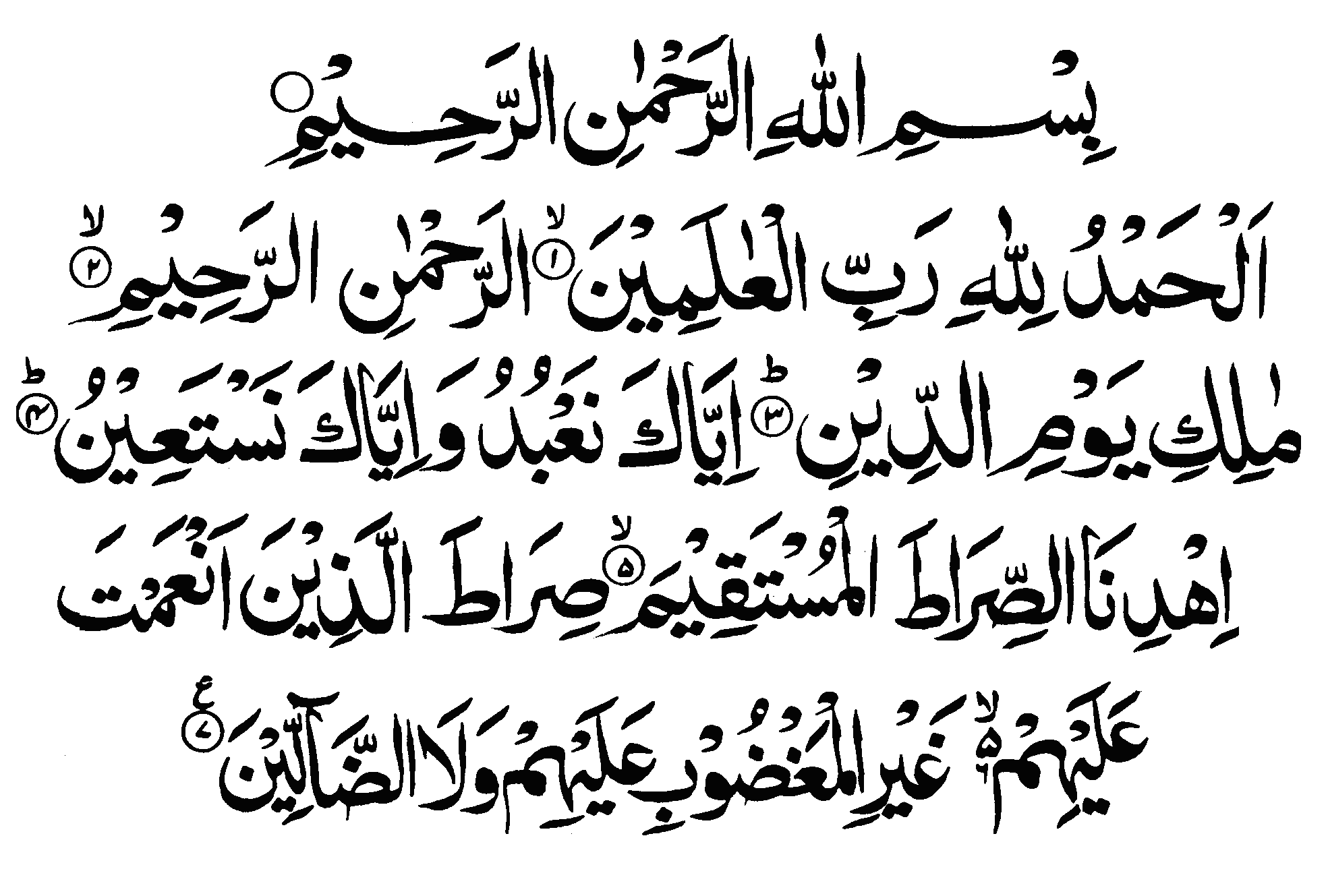
Fatiha: This is what a fatiha looks like. It is described as the first chapter of the Muslim holy book, the Qur'an. Its seven verses are a prayer for God's guidance and stress the lordship and mercy of God. This chapter has a special role in daily prayers being recited at the start of each unit of prayer.
After looking up these various terms it made the book more clear. However because I know almost nothing about the Muslim religion and traditions, their point in the book still had little meaning. This book would have meant more if we, as a class, did a little more research on the Muslim traditions before reading this book. The references are amazing but they have very little meaning to me.

Thursday, November 6, 2008

Current Issue: HIV\AIDS


The current issue I decided to explore some more was the AIDS epedemic in Africa. This issue has been a problem for African countries but as of April 2008, it got worse for Nigeria.


"The Nigerian state of Anambra recently banned the promotion and distribution of what it calls "unnatural" contraceptives, including condoms. "Instead of teaching children how to use condoms and enjoy sex, they should be taught total abstinence," Amobi Ilika, the state commissioner for health, said when announcing the ban late last month. He added that the "use of condoms has greatly encouraged immorality."" (Kaisernetwork.com)

These issues have been plauging Africa for years, but it has only been recently that Western World News has recognized it as a problem. According to Globalissues.org, it wasn't until the 90's, around the same time the US declared AIDS as an issue that Africa had any attention called to its epidemic.

"What is also disturbing is how the situation in Sub-Saharan Africa only become real western mainstream media news headlines around the time HIV and AIDS was declared a national security threat to the United States. While it it understandable that a media may reflect concerns in its own nation, it is another example of the mainstream coverage and their priorities, especially when there is a lot to report in terms of western economic policies seen through the various international institutions that have increased poverty, an important factor in the spread of AIDS."
Finally after the belated western world media gave Africa some attention, multinational pharmaceutical companies began lobbying in developed countries. However this soon revealed that these companies were more worried about profit rather than Africans, because they would not allow African nations' to use generic versions of the namebrand drugs they had.
"Currently, treatments, which Medicines Sans Frontiers describe as having “transformed HIV/AIDS from a death sentence to a chronic disease in developed countries”, are expensive and affordable by mainly the wealthier people in western countries. However, poor people—including those in industrialized nations—are the major victims of HIV and AIDS."


In 2000 the Export-Import Bank of the US gave Africa one billion dollars to finance the purchase of U.S HIV\AIDS medications. However this heroic effort was also thrown unfairly because three countries: Namibia, South Africa and Zimbabwe were rejected the offer.


"With over 40 million people infected with HIV worldwide and over 11,000 new infections every day, universal access to comprehensive HIV prevention services is essential. In 2006, roughly 4.3 million people became newly infected with HIV, including roughly 530,000 children under the age of 15, most of whom were infected through mother-to-child transmission of the virus." (aidschannel.org)


To address this horrible epidemic the Global Aids Alliance has come up with a plan to help Africans deal with the HIV\AIDS issue in their country.

"The ABC approach
􀂾 Abstinence-until-marriage: refraining from sexual intercourse until marriage, or returning to
abstinence after a period of out-of-wedlock sexual activity
􀂾 Be faithful: committing to having sex with only one partner and avoiding casual sex; avoiding
“grazing”
􀂾 Condoms: using condoms correctly and consistently. “C” also represents comprehensive
prevention.
􀂾 The ABC approach is the HIV prevention model used by many organizations, including UNAIDS
and PEPFAR." ( globalaidsalliance.org )

Another aspect that was recently added to the ABC model was DEF.. which included a very important point in fighting AIDS.

"Education: Improving girls’ education
􀂾 In many countries, women and girls are the primary caregivers for their families. However,
when they are prevented from accessing resources or learning about nutrition and health,
entire families suffer. Additionally, lack of education is often a barrier for women who are
attempting to leave an abusive relationship.
􀂾 Eliminating school fees is a crucial first step to improving girls’ education. By eliminating these
fees, all families will be able to afford to send their children to school. Girls who receive an
education are more likely to be economically independent and understand the risks and
prevention methods of HIV. Further, when educated girls grow up and have families of their
own, they will be more likely to send their children to school, helping to break cycles of abuse
and poverty."


In my opinion this is huge. Later in the website it gave some more facts about AIDS prevention and education in Africa among young girls.


"Worldwide, young people ages 15 to 24 account for 40% of new HIV infections. And almost two-thirds of these newly infected young people are girls, who are especially vulnerable to HIV infection for a variety of social, cultural, economic, and physiological reasons. In addition, girls are often taken out of school to care for sick relatives or forced to go to work to replace family income lost due to AIDS deaths. Orphans are also at high risk of HIV and much more likely to be forced to leave school.
Millions of young people lack accurate information about HIV/AIDS, and girls tend to be more poorly informed than boys. But basic education can equip all children with the skills and knowledge they need in order to avoid HIV infection. Indeed, education links directly to safer behavior and reduced HIV infection rates, and experts agree that basic education ranks among the most effective-and cost-effective-means of HIV prevention. The Global Campaign for Education estimates that if all children received a complete primary education, as many as 700,000 cases of HIV could be prevented each year."

This is a great plan to stop the spread, but a number of obstacles are in the way, such as school fees, financial resources for schools, curriculum problems and The Fast Track Initiative.

AIDS\HIV has been a horrible issue in Africa for many years, but has only recently recieved attention for it. There is still a lot of work to be done, but luckily there are a lot of companies out there who are fighting for Africa.

Sunday, November 2, 2008

Waiting for an Angel


This amazing stories brought up a lot of questions and interesting topics about Nigeria and the horrible history it has. I really liked the writing and how the story of Nigeria was told so I did some research on Helon Habila to see what I could come up with.


Helon Habila was born in Nigeria in 1967. His father was a type of church worker who helped christian missionaries in Nigeria. He studied literature at the University of Jos and taught at the Federal Polytechnic Bauchi, before moving to Lagos to work as a journalist. In Lagos he wrote his first novel, Waiting for an Angel, which won the Caine Prize in 2001. In 2002 he moved to England to become the African Writing Fellow at the University of East Anglia. After his fellowship he enrolled for a PhD in Creative Writing. His writing has won many prizes including the Commonwealth Writers Prize, 2003. In 2005-2006 he was the first Chinua Achebe Fellow at Bard College in New York. His second novel, Measuring Time, was published in February, 2007. He currently teaches Creative Writing at George Mason University in Fairfax, Virginia, where he lives with his wife and two children.


He actually has a "Blogger" blog! You can find it here.

There were some themes to the book that I thought were very depressing and sad. For example the book starts in a prison cell with Lomba a seemingly innocent writer. It then moves to earlier history about a student who drops out of school, his closest friend loses his sanity in front of him, the terror the military brings, his novel never being finished and losing a woman to another man. This storyline spells out s-u-i-c-i-d-e! But not to worry there are undertones to this book that keeps the story moving and people from jumping out windows when they are finished reading it.


The characters in Waiting for an Angel are a representation of the story of Nigeria. They are individual stories of ordinary people living in extraordinary times. The whole time I was reading the story I kept thinking about Achebe and his story Things Fall Apart. The authors really capture the essence of the nation and the people during those times. I was reading articles about interviews Habila gave to people and it amazes me that this author still wants to write even with what goes on in Nigeria. He explained that in order to get a book or work published it has to be "Self-published." He stated that Nigeria does not spend the necessary money and time on scholarly literature or writers. Can you imagine not having an agent and getting your books out to the public single handedly? Its amazing what an inspiration these writers are and once you read their stories, the inspiration only soars higher.


My favorite character of the book had to be Aunt Rachael. In the beginning you see her as a compassionate aunt who takes her nephew in after his dad kicks him out. She feeds him and gives him a tutor for nothing. But later in the story we see her slipping, she begins drinking more heavily, and having more frequent outbursts. I don't blame her however, if someone left me like that I would be pretty depressed too. But! She is an amazing woman and bounces back. When Habila described her turning around I couldn't stop smiling. I thought of all the strong women in my life and all the women who have been through the same thing. Habila really captured the essence of womanhood and overcoming obstacles.


What can I say, I read this book in one sitting and LOVED it!

Wednesday, October 29, 2008

Black Gold


In the first article taken from National Geographic, I thought the title was a great opener. Curse of the Black Gold: Hope and betrayal of the Niger Delta. The hope part I sort of chuckled at because there was and is no hope for Nigeria. There are some very memorable and meaningful quotes throughout the essay I think are worth mentioning. The first comes from the first page when they are giving a brief introduction:

"The World Bank categorizes Nigeria as a "fragile state," beset by risk of armed conflict, epidemic disease and failed governance." From the World Bank website I found this new updates on their summary of Nigeria:
The World Bank is helping to fight poverty and improve living standards for the people of Nigeria. As of August 2007, the World Bank had approved 123 IBRD loans and IDA credits to Nigeria for a total amount of about US$9.5 billion. The commitment value of the 23 ongoing projects is about US$2.67 billion. The 23 active projects are in all the major sectors.

http://go.worldbank.org/KY8ZJIMB60 a look!

Little did they know how true this is to become. The essay states later that the attacks on the oil companies were becoming more frequent and more violent. Michale Watts was quoted saying:
"Across Africa you have a huge number of alienated youths, politically footloose, who thought they could achieve something with their countries' moves to independence and democracy. Those hopes have been almost everywhere violently snuffed out. The youth are pissed off and willing to up the ante."
After this comment various other people were talking about the situation in Nigeria and comparing it to the Middle East, they said "if the situation threatens to turn into another Middle East, then the world will finally intervene."

I don't completely agree with this statement. First because what is happening in Africa is worse in my standards than what happened in the Middle East. Their history and destruction they have endured is not comparable to that of the Middle East. Secondly the world has already intervened enough! They have taken control of Africa, without anything being wrong in the first place. The reason Nigeria and Africa as a whole are in such shambles is because of the world being there!
The second paper, Untapped: The Scramble for Africa's Oil, goes more into detail about why the big oil boom in Africa. One of the most interesting aspects I found in this essay was the blunt and horrid truth of it all. For example:
"This means that even if a civil war or violent insurrection breaks out on shore, the oil companies can continue to pump out oil with little likelihood of sabotage, banditry, or nationalist fervor getting in the way."
The oil companies know where they sit and what their power is in Nigeria and all over Africa. It is sickening to read about them knowingly deplete Africa of its resources. The paper also dictates that African oil is cheaper, safer, and more accessible than its competitors, and there seems to be more of it every day. This part of the essay compares Africa's oil to that of Saudi Arabia and other Middle East countries. The very first sentence puts this idea in concrete.
"United States now imports more of its oil from Africa than it does from Saudi Arabia."
I found this article while researching more about Nigerian Oil and I thought it put things in perspective very well :"Nigeria should be a massively rich country. It's the most populous country in Africa, and is the world's sixth leading oil producer. Over a quarter trillion dollars in oil has been lifted from Nigerian soils and waters in the last 40 years. But after years of military rule and rampant corruption, fueled by these oil monies, the country is mired in billions of dollars in debt and is wracked with poverty."

Monday, October 27, 2008

Chief Roles


As we read in our past few books, Europeans forced a lot upon the African civilization. One word that was mentioned and comes to mind quite often is corruption. According to Princeton University and Dictionary.com, Corruption is defined as the following:


1. lack of integrity or honesty (especially susceptibility to bribery); use of a position of trust for dishonest gain
2. decay of matter (as by rot or oxidation)
3. moral perversion; impairment of virtue and moral principles;
4. destroying someone's (or some group's) honesty or loyalty; undermining moral integrity;
5. inducement (as of a public official) by improper means (as bribery) to violate duty (as by commiting a felony)

Well this definition definetly hits the nail on the head. The Europeans were causing the decay of morals and loyalty of the Africans and using it all for dishonest gain. One group in particular that the European colonizers corrupted were the chiefs. As we discussed in class most of the "chiefs" were not chiefs but appointed by their clan members or Europeans to be the delegate. Then the colonizers put them in places of power which were not meant for them. They would either misuse this power or become in a sense slaves to the Europeans above them. On page 162 of Ancestor Stones it states:


"Somehow new of the strike had reached the chief who sent his messenger to alert the Distict Commissioner. Bu the time the strikers arrived the next morning DC Silk was waiting in front of the compound with his soldiers, ready to arrest the ringleaders."

This quote puts in perspective the power and uselessness of the chiefs placed in charge by European powers. They were the snotty teachers pet in the back of the room telling the teacher when kids were chewing gum.


I found this article that I think explains the hardships and exactly what Europeans did to the African culture very well.
Colonialism and Corruption in Sub-Saharan Africa:
"On the contrary, the practice of rewarding tax collectors became a principal
method for the accumulation of private property, a way of life that was hard to give
up which encouraged chiefs to abuse their office. As Leonard (1991: 29) put it,
colonial chiefs "were implicitly encouraged to use their positions to amass wealth
and demonstrate thereby that it paid to cooperate with Europeans".


"It was not the introduction of taxation per se, but the manner in which the tax
itself was collected, that encouraged corrupt behaviour. To collect taxes, the colonial governments mostly relied on local African leaders and especially chiefs.
Where chiefs did not exist or were unco-operative, new ones were appointed by the
colonial powers (Richards 1959; Crowder 1968). Above all, to motivate chiefs to
generate as much tax revenue as possible, and do so with zeal, the colonial
administrations allowed them to retain a part of it."

Jeffery Hanes (who I have been reading a lot of material from lately) wrote a review article about the power in Ghana from colonial times to the 1990's. His article is published in the journal, AFRICA.


"Although the two main colonial powers in the region, Britain and France, developed their own democratic systems during the 19th and 20th centuries, the political institutions they created in their African colonies were designed primarily as instruments of their domination and control. In most colonies, colonial administrative networks were grafted on to existing political institutions, and European hegemony and security were very closely linked. When they could be found, colonial administrations attempted to employ intermediaries, interlocutors- often known as "Chiefs"- to 'do their dirty work for them', that is, they were able to identify or, when neccessary, to create as authority figures the indigenous individuals who would be useful to the European goal of political and economic domination."


My point exactly.