Tuesday, October 14, 2008

Xala

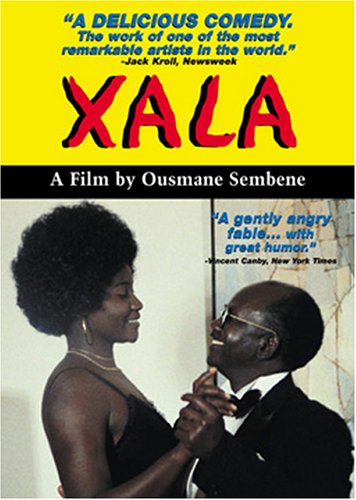
First I would like to comment on the literal meaning of 'xala' in the book. When I first saw the title and began reading I thought xala was going to be something to do with government or a saying that meant change. When I read that xala was a course of male erectile disfunction I literally laughed out loud. It was a twist thrown into the story I did not see coming. 


Anyways aside from that humerous note I liked the fact that Ousmane depicted the different views of poligamy and the religion behind it. For example the daughter, Rama, did not agree with or understand poligamy and the belief's behind it. She constantly commented on the state of her mother's well being and how the marriages of El Hadji were affecting her. Secondly the awa, Adja Awa Astou was the first wife. She seemed to have a very religious air about her. She took a lot of pride and spent a lot of time studying, learning and living her religious views. She is a very patient person that deals with her husband's issues very well. I think she is quiet about her dislike for her husband's other wives, not so much she is green with jealousy and hatred, but sad and hurt that she is not the

 only one. I think that would be the hardest thing to deal with in poligamy. 

     The next point of view is that of El Hadji. He was happy with his two wives in the beginning. He had the elder one whom was his first love and he respected and gave him a good reputation. He had his second wife which was younger and even more beautiful she also gave him kids, and like the first boosted his reputation. The idea of taking on a third wife was not his idea at all in the beginning. He lusted over he body yes, but he had no real need or want for another wife to spend money on. This brings me to another point of poligamy, El Hadji did not believe in some of the customs and traditions tha
t were associated with this religious tradition. During the wedding and before the women told him to obey the rituals but he refused because he thought they were silly. Him doing this kind of mocked himself and what he was doing. To put this in perspective for myself I thought of the christian religion. That would be like claiming to be a catholic but not wanting to participate in the sacraments, calling them foolish and silly. 

The final character that I thought had an interesting perspective was N'Doye. She is depicted in the book as being around 20 years old, gorgeous and forced to like this successful man that had an erectile disfunction. She was to be the younger of the three wives, and she knew the jealousy that would be involved with the other two. She was going to be scorned by the othe
r two and had a lot to live up to. It seemed as if it was definetly an arranged marriage because she had no emotion in it. Her character is a little hollow, but she was still apart of this religious tradition. 

Monday, October 6, 2008

How Europe Underdeveloped Africa [Education]


Maybe its because I am going into education but this part seemed to have the biggest impact on me in Rodney's essay. He pointed out that education is needed to move a society forward whether it is from common sense, actual literature and mathmatics or agricultural and labor learning. Which ever one, education is behind it all. Rodney used the example of the Bemba society where a six year old could name off fifty species of trees but when it came to flowers they couldn't name any. This was because it was taught to them early because trees, firewood and other wood by-products were their way of living, where as flowers were not.


Rodney also pointed out that some aspects of education in Africa were formal too, not just taught by elders and other authorities. However, these classes that were taught were restricted to certain areas in life. This could be age related or grade related. The example he used was circumcisions for men coming of age. These were used only on boys that were deemed old enough to be entered into manhood. The other examples of formal education in Africa were taught by the clan as a whole, such as hunting, gathering, religious rituals or medicine practice.


Speicialization came about later in the education of African youth. These often advanced as the technology being used in the clan at the time. Divisions of labor such as iron working, leather making, and pottery were just some examples he used. Emphasis was also put on military force in countries and private clans. However evidence has shown that in cultures where written advancement was made, education was more advanced and was better learned. Also being literate was incorporated with the learning of religion. Priests, monks and other christian beings were trained at secondary and university levels and were in the minority of literate Africans.


Suprisingly, there were even Universities set up in Africa such as the Al-Azhar University, University of Fez etc.


Obviously all this previous talk was before Europe even came into Africa. When Europe came into Africa they just set up a new formal education institution which supplemented what was already there. But their main purpose of the school systems were to train Africans to help them maintain the local administration. In Things Fall Apart this was made apparent by the Africans who spoke different dialects, the court messengers. They were trained in these schools to act as interpreters between the Europeans and the Africans.


"It was not an educational system designed to give young people confidence and pride as members of African societies, but one which sought to instil a sense of deference towards all that was European and capitalist."


Friday, October 3, 2008

Bandung Conference

1. Respect for fundamental human rights and for the purposes and principles of the charter of the United Nations
2. Respect for the sovereignty and territorial integrity of all nations
3. Recognition of the equality of all races and of the equality of all nations large and small
4. Abstention from intervention or interference in the internal affairs of another country
5. Respect for the right of each nation to defend itself, singly or collectively, in conformity with the charter of the United Nations
6. (a) Abstention from the use of arrangements of collective defense to serve any particular interests of the big powers(b) Abstention by any country from exerting pressures on other countries 7. Refraining from acts or threats of aggression or the use of force against the territorial integrity or political independence of any country
8. Settlement of all international disputes by peaceful means, such as negotiation, conciliation, arbitration or judicial settlement as well as other peaceful means of the parties own choice, in conformity with the charter of the united nations
9. Promotion of mutual interests and cooperation

10. Respect for justice and international obligations.

These are the 10 points agreed upon unanimously called the "declaration on promotion of world peace and cooperation at the Bandung Conference of 1955." On April 18, 1955 a meeting of Asian and African states (which were mostly newly independent) was called into session by Ruslan Abdulgani. Egypt, Indonesia, Burma, Ceylon, the Philippines, India, Iraq and Japan organized this Bandung Conference in Bandung, Indonesia. The purpose was to promote Afro-Asian economic and cultural cooperation, opposing colonialism and neocolonialism by the United States, Soviet Union and any other "imperialistic" nation.

There were 29 countries delegates in attendance, what the conference reflected was a reluctance by Western powers to discuss with them on decisions affecting Asia and Africa. The major points concerned settling the Cold War in China and the French influence in North Africa. After much debate a consensus was reached that, "Colonialism in all of its manifestations" is to be condemned, implicitly censuring the Soviet Union and the West.

The Final Communiqué of the Bandung Conference pointed out the need for developing countries to loosen their economic dependence by providing technical assistance to leading industrialized nations for developmental projects and exchange of technical know-how.


China had a major role in this conference, strengthening their ties with other Asian countries. Africa, especially Algeria had the French colonies in their countries addressed. The Bandung Conference was followed by the Belgrade Conference in 1961 which lead to the Non-Aligned Movement.
The Non-Aligned Movement was established as an international organization of states that considered themselves neither aligned or against any major power country. It was founded in 1955, and as of 2007 it had 118 members. The purpose was to ensure "national independence, sovereignty, territorial integrity and security of non-aligned countries in their struggle against imperialism, colonialism, neocolonialism, racism, Zionism and all other forms of foreign aggression."

Wednesday, October 1, 2008

An Image of Africa


After reading the essay by Chinua Achebe I was a little confused by some of the points he made. Although he was thorough and made a lot of good points a couple in particular stuck out to me as odd. On first read through my jaw dropped when point number 37 came up,

"The point of my observations should be quite clear by now, namely that Joseph Conrad was a thoroughgoing racist. That this simple truth is glossed over in criticisms of his work is due to the fact that white racism against Africa is such a normal way of thinking that its manifestations go completely unremarked. Students of Heart of Darkness will often tell you that Conrad is concerned not so much with Africa as with the deterioration of one European mind caused by solitude and sickness. They will point out to you that Conrad is, if anything, less charitable to the Europeans in the story than he is to the natives, that the point of the story is to ridicule Europe's civilizing mission in Africa. A Conrad student informed me in Scotland that Africa is merely a setting for the disintegration of the mind of Mr. Kurtz."


Racist?! I could not believe that this word was coming up among everything else that has been written about Africa. When I was reading Heart of Darkness I thought Marlow was a little odd in his explanations about the events happening but I never even considered that he was showing prejudice over the Africans. In Marlow's descriptions of the things happening to the African slaves I admit he was a little unemotional, but I didn't get the impression that he was uncaring. He seemed concerned at what was happening, but a little too involved in his own personal life and work to spend too much time on the people. In class we discussed that Marlow was outraged, yes this may have come after he thought about the situation, but his text didn't show lack of concern or prejudice.


As far as the European minds deterioating, yes he spent time on the subject because if someone told you they wanted to measure your head before you went to Africa to see if it shrunk you would be baffled too. Marlow's opening line about this too being the darkest place on earth gives the first impression that what he saw and experienced in Africa was not happy and careless. He did notice the pain and suffering the Africans were put through but at the time he was more concerned with other things, namely Mr. Kurtz.


On the 38th point, Achebe discusses the dehumanization of the Africans in Conrad's book. This is apparent in the reading however, when you look at the situation and background Marlow is coming from it makes sense. Marlow was coming from a place where white people were supreme and the Africans were nothing. When a person is taught to believe this and is shown this over and over again, its hard not to believe it for yourself. Arriving in Africa and seeing the people was horrifying yes, but he had already been pre-warned that these people were criminals, slaves and meant to be punished by this inhumane torture. Now, Marlow knew that this was not right by his text,


He was being very blunt in saying that what the Africans were labeled was completely insane, but who was he to say any different. If anything Marlow was just following human instinct and looking out for number one and turning a blind shoulder to what the Europeans were doing. Marlow even describes a run in with a dieing African under the tree. He didn't simply huff and kept walking, he stopped observed and even fed them a piece of his own food.

When this happened I imagined a dog pound. The abused animals are sitting there waiting to die of starvation and disease. Most people would not do anything to help these animals but observe what was happening and feel compassion for them. Maybe even offer them a piece of meat. This is exactly what Marlow was doing, observing but not acting. Marlow wanted this job, he wanted to meet Mr. Kurtz, speaking up about this horrible situation could get him kicked out of the Congo and out of a job. Like most people in his situation, he simply left well enough alone. If Conrad didn't care about the well-being of the African people he wouldn't have recorded this testimony in his book. He simply would have left well enough alone. The text itself has no other purpose except for historical reading about Africa. It cannot be mistaken for any other genre of literature, so it must have had an impact on him.


"He was there below me and, upon my word, to look at him was as edifying as seeing a dog in a parody of breeches and a feather hat walking on his hind legs."


This illustrates my point about the Africans being compared to dogs. Africans were not seen as human beings when Marow was describing his adventure to the Congo. Africans were barbarious, dirty, worthless unless it came to work, unhuman and unrelatable. There were quotes about the language the Africans spoke. It wasn't described as words, it was "a violent babble of uncouth sounds, exchanges of short grunting phrases..." Marlow was just bending to society's views of the Africans. It doesn't mean that was his personal belief. Achebe seems to be attacking Conrad with biased information. His arguements after number 37 and 38 seemed to fall apart and just nit pick at Conrad's book. He even had the nerve to call this praised book a plague in the literature world.

Monday, September 29, 2008

Heart of Darkness


While reading Heart of Darkness I found the character Mr. Kurtz very interesting. Throughout his story Marlow is searching for this myseterious man while in the Congo. He first learns of him through stories and tips from the people who have met this man. Soon he is on his way to meet this "talker" and man supposedly full of wisdom. He battles the natives, the river and people aboard his steamer to find this man and talk to him. He specifically recalls wanting to talk to Mr. Kurtz, not about anything in particular, but just wanting to talk to him. When he finds the book, his obsession just grows deeper with the man he had never met. I particularily liked the part where he finds the small book written by Mr. Kurtz. The lines that he finds ominous are quite interesting.


"Must nesissarily appear to them [savages] in the nature of supernatural beings- we approach them with the might as of a diety..."


"By the simple exercise of our will we can exert a power for good practically unbound..."


These few lines Marlow said captivated him and allowed for him to relate to Mr. Kurtz. I thought that the meaning behind it was pretty powerful. When the Europeans first met the savages they didn't know what to do with them. They approached them with caution and wariness. However, once they realized that they were not a diety, they destroyed them, seeing them as a threat. The second line made more sense however. He was saying that by just putting ourselves out there and trying to be compassionate and understanding we can do things for the ultimate good, that knows no bounds. But the Europeans did not see it that way instead they were on "search and destroy mode."


Another interesting point of the story that stuck out was the painting that Mr. Kurtz had done of the woman and the torch. Although I could not see the portrait I could imagine and feel the intesity that it radiated. Imagine seeing something like that admist all the chaos and death around the camp. The fact that she was blindfolded somewhat reflects what Marlow had said earlier about Kurtz's notes. People are blind to the fact of what is happening in Africa, but are supposed to be lead by a light, which could be King Leopold or some other investment.


Although Wikipedia said that they thought "Heart of Darkness" symbolized civilization and spiritual darkness that Europe brought to Africa. I guess to each their own.

Wednesday, September 24, 2008

A hero in Africa

In class yesterday we spoke briefly on the note of heroes. This got me thinking about different characters in the book that would be considered heroes. Definitely not Leopold or Stanley, but there were others.


After finishing King Leopold's ghost, one man in particular stuck out to me. Mr. William Sheppard. This man was a black American traveling to the Congo in the name of the church. The book claims that he was the first black man to travel to the Congo, and he taught Christianity for nearly 20 years. He went to the Congo with high hopes, not knowing what the Europeans were doing to the black people there. Finally, after two years of pleading he convinced the church to let him serve in the Congo (even though it was under another Minster, a white minister to be exact.) Unlike explorers before him Sheppard was genuinely interested in helping the native people. He and his fellow missionary started right away learning the language and traditions of the native people. He was delighted to be in Africa! "my people" he states "the country of my forefathers." This man even rode what was considered the first joi de vivre (bicycle) in Africa. While stationed at the mission Sheppard became very familiar with a isolated community known as the Kuba. He was the first foreigner to reach the town of Ifuca, the place inside Kuba where the king presided. He was accepted by the king because of his skin color and spent a great deal of time there. Foreigners before him were beheaded by the king and the country fought fiercely to keep intruders out. This must have been a highlight in Sheppard's life. He had been collecting Kuba art and tapestry and studying their culture, but to be accepted into it was another story. He wrote numerous accounts of their sophisticated political system and other aspects of their daily and political lives. Although Sheppard didn't make much headway with converting the Kuba people, the discoveries and popularity he gained from them was enough to keep him in the Congo.


William Sheppard's story doesn't seem very heroic at first glance, but after going back through this part of the book, I realized it wasn't the "heroic" actions he did it was the simplicity of his heart and actions. This man, unlike many before him was not after ivory, rubber or slaves, he was there to teach Christianity and learn more about the people of the Congo. He befriended them, learned their language and became a beloved "hero" to them. He didn't try to change their behavior or teach against it, he simply influenced through his charm and personality. Amidst all the atrocities and death, this man was one of their color and genuinely cared about the people. This African-American man whose father was a slave, practiced acceptance of the Africans like no missionary before him.

-Sheppard wearing a traditional European attire.

The definition of a hero is one who puts others before themselves, and although Sheppard originally went there for himself, he came back a hero of the Africans. He put his very life into learning their culutre and serving the people.

Sunday, September 14, 2008

King Leopold's Ghost -100


Reading up to page 100 seemed to be very short when I started reading King Leopold's Ghost. But after getting into the book, it proved to be a great stopping point. Starting the book off with a man running away from himself was very admirable. I found myself liking this "John Rowlands" or later known as Henry Morton Stanley, for this reason. People in his situation have rights to make their lives better for themselves and because of his expedition Stanley did just that. Stanley was definitely the hero of the book, traveling, sightseeing and living his life the way he saw fit. His writings are what I enjoyed most. He seemed to like writing about his journey's, historical facts and current news, but his passion was rooted in fiction. To every account he wrote there was some sort of passage or elaboration that he added to make his writing even more juicy and intriguing. His tales of the war, and especially his journey to find Livingston were elaborated but reading them I fully enjoyed his tales. Apparently people on the American shore liked his writings too, because he soon became a "must read" section of the papers in New York. Later in the book the character King Leopold came into the story.

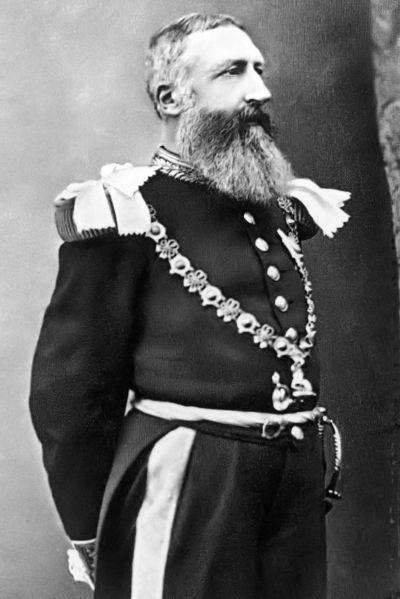
From the very beginning I didn't like this boy. The way the author described him made me want to skip over that chapter and continue on with Stanley. However further reading into the book proved that Leopold was a very imaginative character with many mysterious characteristics. His obsession with Africa had me wondering what he was really capable of if he had put his effort elsewhere; like ruling his country. His desire for these African colonies was ruining everything in his life. He had no relations with his wife, except the birth of his two daughters and no relationship with them either. He didn’t seem too concerned with the well being of his home country, everything was focused on his “Congo.” I thought it was interesting the way he fed off of Stanley’s emotions and skills to get him to explore for his small country. He had a peculiar way of playing with this famous explorer to get exactly what he wanted.



Later this characteristic comes up again when he is fighting for land rights of the Congo. He plays with the minds of England, France and Germany, hoping that they all fall victim to his master scheme. Unfortunately for them, it works and they all go along with his rise to dominance.